Professional fluoride varnish
May suit: For risk-based topical application during a dental visit. Timeline: Repeated according to caries risk.
Fluoride treatment strengthens tooth mineral and can help prevent or control decay when used appropriately. Professional varnish, toothpaste and supplements are different forms with different indications and ingestion risks.
At Sai Multi Speciality Dental Clinic, Baner, the dentist reviews decay risk, diet and brushing habits before advising whether varnish, toothpaste or another form of fluoride suits you or your child, and how often it should be used.

Clinically reviewed by Dr Archana Satpute and Dr Shrikant Gadakh, both dentists at the clinic. Last reviewed 16 October 2026.
Professional topical fluoride may be recommended for children at caries risk as part of a broader preventive plan. It does not replace brushing, diet management or treatment of established cavities.
Fluoride supports remineralisation and makes tooth mineral more resistant to acid attack. Professional products have higher concentrations than daily toothpaste and are applied in controlled amounts. [1]
Too much swallowed fluoride while teeth develop can contribute to fluorosis, so toothpaste quantity, supplement use and all fluoride sources should be reviewed together.
Varnish acts topically in the clinic. Toothpaste is used daily in small age-appropriate amounts. Supplements require assessment of water fluoride, other sources and caries risk.
Patients also search for this as fluoride varnish, a fluoride application or fluoride for cavity prevention. If you are looking for fluoride treatment in Baner, the dentist checks your risk of decay, explains how a fluoride varnish works and how often it is applied, and shows how to use fluoride toothpaste and rinses at home. Related reading: pediatric dentistry.
The right treatment starts with identifying the condition and the least extensive suitable option.
Suitability depends on examination findings, not symptoms or appearance alone.
Fluoride works alongside plaque removal, lower sugar frequency, saliva and sealants. Applying varnish without addressing these factors gives an incomplete prevention plan. [2]
May suit: For risk-based topical application during a dental visit. Timeline: Repeated according to caries risk.
May suit: For supervised daily home prevention using the prescribed amount. Timeline: Ongoing with technique review.
May suit: For selected children only after reviewing water and dietary sources. Timeline: Prescribed and monitored when indicated.
Want to talk this through before you book? Our team can answer questions about fluoride treatment by phone or WhatsApp.
The condition, remaining support and long-term maintenance needs determine the appropriate option.
Review disease history, diet, plaque and saliva.
Check toothpaste, water, supplements and other products.
Choose formulation and interval for age and risk.
Use a controlled amount and protect ingestion.
Coordinate brushing, diet, sealants and recall.
Care moves from diagnosis and planning to treatment, checks and maintenance.
Application is usually brief and can occur with a preventive visit. Frequency is individualised rather than automatically scheduled for every child.
Visit numbers depend on diagnosis, complexity, preliminary care and review needs.
Varnish may feel sticky and can temporarily coat tooth surfaces. Children receive instructions about eating, drinking and brushing according to the product used.
Tell us about anxiety, sensitivity, previous difficult dental experiences or medical concerns before care begins. We can explain each stage, agree on a stop signal and pause when clinically appropriate.
Comfort planning begins with knowing what you feel and agreeing how we communicate during care.
Use the eating and brushing instructions provided.
Use only the age-appropriate amount.
Fluoride cannot overcome constant acid challenges.
Recommendations change as disease risk changes.
Follow the advice for your specific procedure and contact us when symptoms worsen instead of settling.
Fluoride reduces caries risk but cannot ensure a child never develops decay. It does not repair a cavitated lesion or replace treatment. Excess ingestion during tooth development can cause fluorosis. [3]
Medical history, medicines, ability to tolerate care and the feasibility of long-term maintenance are considered before elective treatment.
Fluoride varnish is generally well tolerated, but it can leave a temporary yellow tinge and a taste, and swallowing large amounts of fluoride products can upset the stomach. Fluoride does not replace brushing or a low-sugar diet. Call the clinic if a child swallows a large amount of toothpaste, or if you notice white or brown patches on the teeth.
Not sure whether fluoride treatment applies to you? Call or message the clinic and we will explain the next step.
We recommend treatment only when the expected benefit and maintainability justify proceeding.
Bring details of toothpaste, drinking water, supplements and prior fluoride products. We assess total exposure and caries risk before recommending application.
Before you decide, we explain the likely benefits, material risks, alternatives and consequences of delay. You can take time to consider elective treatment.
Children are not small adults, and the same procedure may need different timing, explanation or materials in a developing mouth. We consider age, tooth eruption, jaw growth, medical history, anxiety, communication and the child’s ability to cooperate safely. The caregiver remains part of consent, prevention and follow-through at home.
Caries-risk assessment looks beyond the number of existing cavities. Feeding and snacking frequency, fluoride exposure, brushing help, enamel defects, dry mouth, medicines and previous disease all contribute. Advice is prioritised so the family leaves with practical changes rather than a long generic list that is difficult to use.
Dental X-rays are not automatic at every visit. They are prescribed when history and examination indicate that the expected diagnostic benefit justifies exposure. The image type and interval depend on age, tooth contacts, symptoms, trauma, eruption and disease risk. Existing usable images should be considered before repeating them.
Behaviour guidance begins with communication. The dental team can use simple explanations, demonstration and gradual familiarisation, but the approach must respect safety and the child’s needs. If urgent disease, complex treatment, severe anxiety, disability or medical risk exceeds what can be managed appropriately, referral is a responsible part of care.
Prevention changes as the child grows. Caregiver brushing, fluoride toothpaste quantity, diet, sealant assessment, sports protection, habits and orthodontic monitoring become relevant at different stages. Recall intervals are therefore individualised and may change after new disease, improved home care or transition into adult teeth.
Parents should know which symptoms require earlier contact: facial swelling, fever, disturbed sleep from tooth pain, difficulty eating, trauma, a draining gum swelling or a tooth that changes colour after injury. Waiting for a routine recall can allow a child’s dental problem to progress despite few initial complaints.
The first visit establishes the diagnosis, priorities and a treatment plan specific to you.
Your care is planned by the dentist whose training matches the treatment, with coordinated support when more than one speciality is involved.

BDS, MDS · Orthodontist
Dr Shrikant completed BDS at Rural Dental College, Loni, and MDS in Orthodontics and Dentofacial Orthopaedics at M.G.V. Dental College, Nashik. He focuses on bite and alignment concerns.
His input is available when tooth position affects the plan.
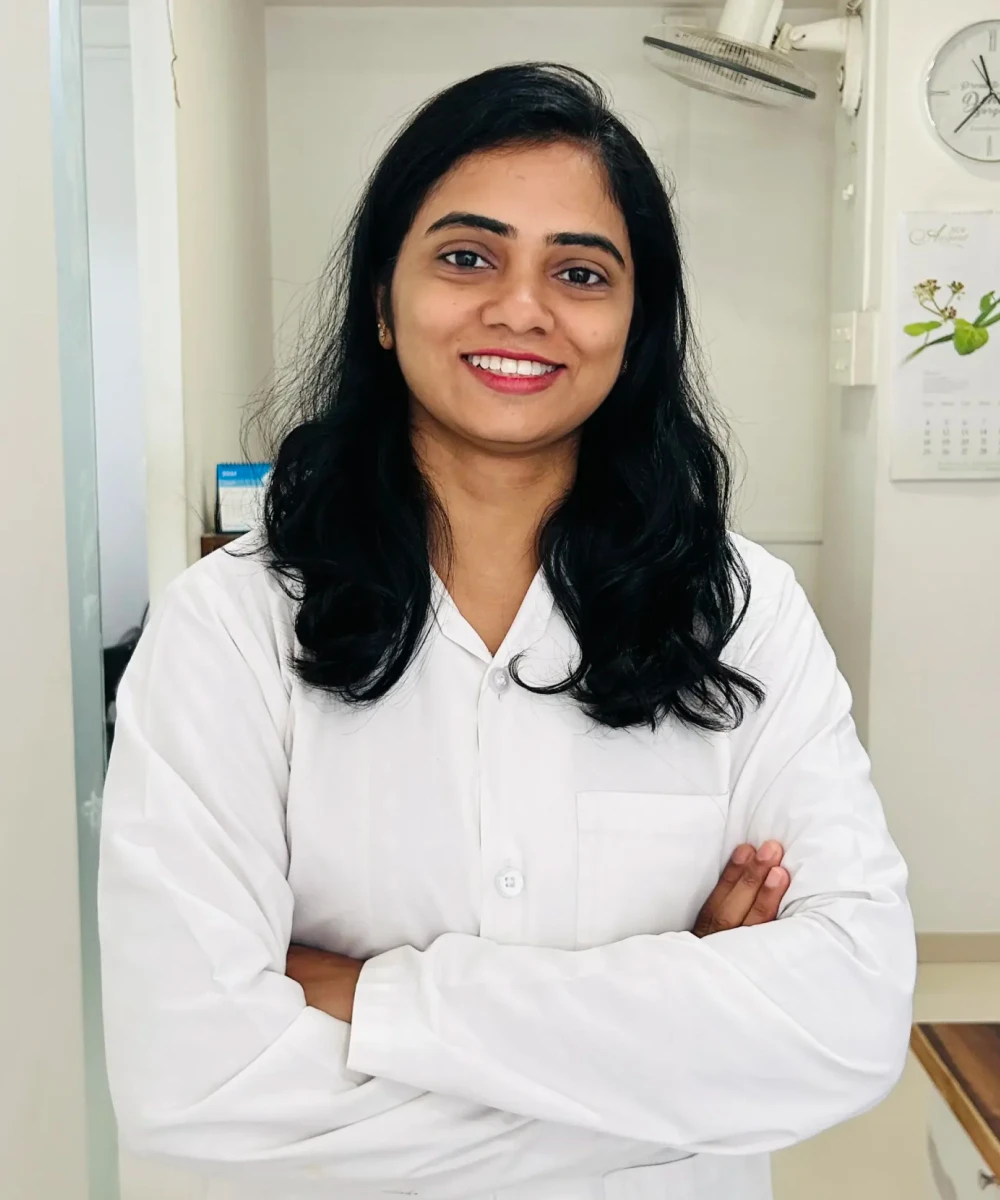
BDS, MDS · Endodontist
Dr Archana completed BDS at Rural Dental College, Loni, and MDS in Conservative Dentistry and Endodontics at SMBT Dental College, Sangamner. She received a Maharashtra University of Health Sciences gold medal and has taught as an assistant professor.
She assesses symptoms, tooth structure and restorative needs before recommending care.
The relevant dentist leads your plan, with coordinated support when needed.
“I had a wonderful experience at the clinic. Dr. Archana was very kind and professional, and my cavity filling procedure went very smoothly and without any issues”
“My teeth were so sensitive and there was cavity so my friend suggested me about this clinic and my experience was awesome doctors are so helpful they provided treatment with care and love”
“I got 4 fillings in front teeth.They look very natural.Thank You Dr Archana. Dr Shrikant is very friendly and cooperative.”
“I visited this dental clinic recently and had a very good experience. The doctor was honest and clearly explained the treatment needed without suggesting anything unnecessary. They are very knowledgeable and answered all my questions patiently. The staff behaviour was polite, respectful, and welcoming. The clinic was clean and well managed. Highly recommended for anyone looking for genuine dental care.”
The rating below is the overall Google rating for the clinic, not a rating for Fluoride Treatment. These are 5-star Google reviews chosen for relevance to this page, shown as written. A longer review may be shortened at the end of a sentence, and the link opens the full review. Reviews describe individual experiences and do not predict the result of your treatment.
Find us in Alacrity Commercial Complex near Bitwise Terratower, Mohan Nagar, Baner.
Sai Multi Speciality Dental Clinic, Baner
Shop no 101, Alacrity Commercial Complex, near Bitwise Terratower, Mohan Nagar Co-Op Society, Baner, Pune, Maharashtra 411045, India
+91 70203 80193
WhatsApp +91 70203 80193
| Monday–Saturday | 10:00 am–1:00 pm 4:00 pm–9:00 pm |
|---|---|
| Sunday | Closed |
Please call before travelling on public holidays.
Call before travelling to confirm the schedule and any access requirements.
It supports remineralisation and resistance to acid, helping prevent or control decay as part of comprehensive prevention.
No. Daily fluoride toothpaste, plaque removal and diet remain essential.
Frequency depends on caries risk, age, findings and other fluoride exposure.
Caregivers should supervise and use the age-appropriate small amount to limit ingestion.
No. Early non-cavitated changes may be managed preventively, while cavitated or infected teeth need other treatment.
Many dentists apply varnish every three to six months for people at higher risk of decay, and less often for lower risk. The dentist sets the interval after reviewing decay risk, diet and home care.
Yes, in the right amount. A smear of fluoride toothpaste for young children and a pea-sized amount for older ones is usual, with supervised brushing. The dentist advises the right products for your child's age and risk.
An examination remains necessary even when your concern sounds similar to a common dental problem.
Tell us what you have noticed and whether the concern is routine, uncomfortable or urgent.
Bring the proposed product, concentration and interval so total exposure, indication and alternatives can be reviewed.
We confirm appointment requests after checking availability.
Related care depends on the diagnosis, treatment sequence and long-term maintenance needs.
