Lower implant overdenture
May suit: For a lower complete denture that needs additional retention after fit is assessed. Timeline: Placement, healing, denture and attachment visits are staged.
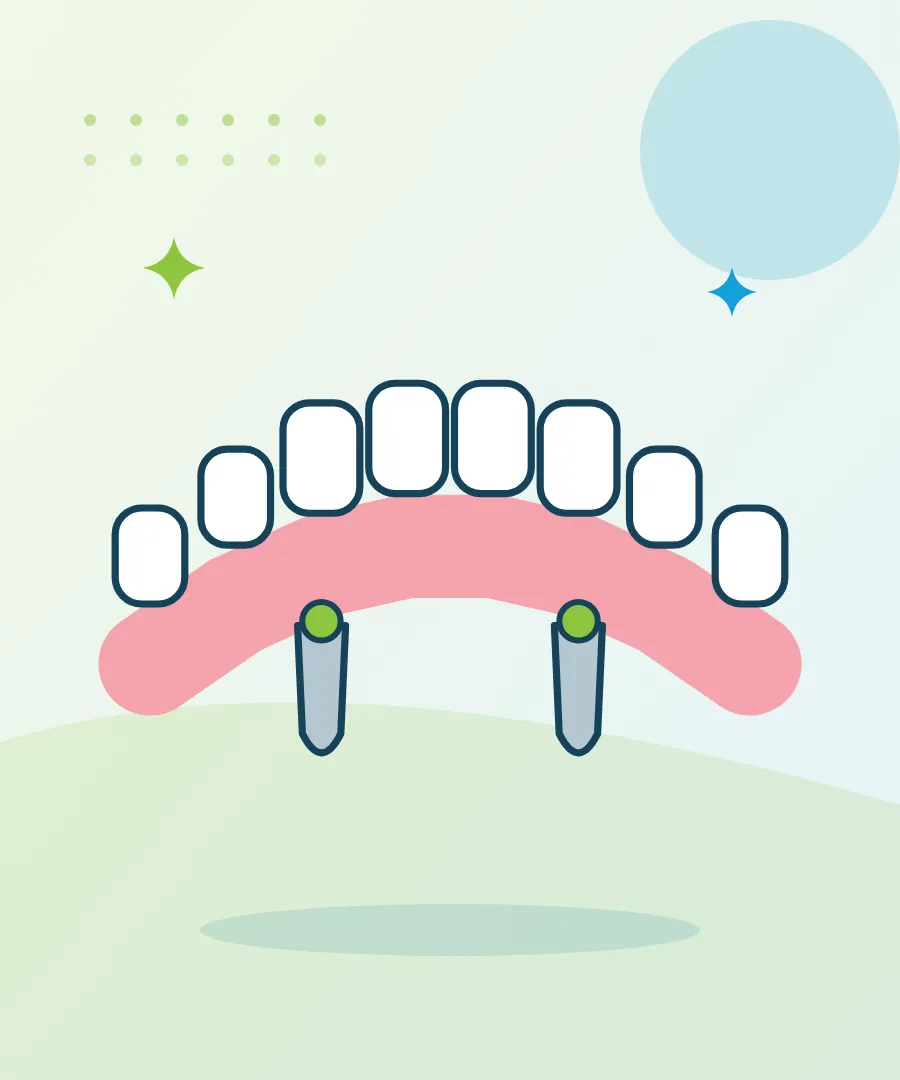
Implant-supported dentures use implants and attachment components to improve the retention of a removable denture. You take the denture out for daily cleaning, which clearly distinguishes it from a fixed full-arch implant bridge.
At Sai Multi Speciality Dental Clinic, Baner, we assess the denture foundation, available bone, smile, speech, bite and hand skills before deciding whether implant retention will meaningfully address your concern.
Clinically reviewed by Dr Archana Satpute and Dr Shrikant Gadakh, both dentists at the clinic. Last reviewed 16 October 2026.
Implant-supported dentures are removable dentures that connect to implants for added retention. Suitability depends on jaw anatomy, denture space, tissue health, expectations, cleaning ability and willingness to maintain replaceable attachment parts.
An implant-retained overdenture clips, snaps or seats onto attachments connected to implants. It remains supported partly by implants and, depending on design, by the gums. The patient removes it to clean the denture and attachment areas. [1]
This option may reduce movement compared with a conventional denture, especially in selected lower jaws. It does not recreate natural teeth, eliminate maintenance or ensure that food cannot enter beneath the denture.
A fixed bridge stays in the mouth during daily cleaning and usually requires a different number and distribution of implants and more space for hygiene access. An overdenture is designed to be removed by the patient every day.
This treatment is also called an implant-retained denture, an overdenture on implants or a snap-on denture. Patients comparing implant-supported dentures in Baner with a standard denture or fixed implant teeth can use the first visit at our dental clinic in Baner to look at jaw bone, gums, bite and the cleaning routine that suits them. Related reading: dental implants.
The right treatment starts with identifying the condition and the least extensive suitable option.
Suitability depends on examination findings, not symptoms or appearance alone.
Complete dentures rely on their fit, muscle control, saliva and the shape of the supporting tissues. Lower dentures often have less supporting area and may move more. Implants can provide attachment points, but the denture still needs correct extension, tooth position, bite and adequate material around its components. [2]
May suit: For a lower complete denture that needs additional retention after fit is assessed. Timeline: Placement, healing, denture and attachment visits are staged.
May suit: For selected upper arches after anatomy and prosthetic space are evaluated. Timeline: Design and implant requirements are planned individually.
May suit: When surgery is unsuitable or a different level of removability is desired. Timeline: Timing varies substantially by the selected alternative.
Want to talk this through before you book? Our team can answer questions about implant-supported dentures by phone or WhatsApp.
The condition, remaining support and long-term maintenance needs determine the appropriate option.
We identify whether fit, bite, borders or retention is causing the difficulty.
Examination and imaging assess bone, anatomy and attachment position.
Planned implants are placed under local anaesthetic and allowed to heal as required.
A new or suitable existing denture is fitted with the attachment system.
Retention, sore areas, bite, hygiene and component wear are monitored.
Care moves from diagnosis and planning to treatment, checks and maintenance.
Several visits are needed for assessment, imaging, implant placement, healing and attachment of the denture. A new denture may require additional records and trial stages. Existing dentures can sometimes be modified temporarily, but only after their fit and strength are assessed.
Visit numbers depend on diagnosis, complexity, preliminary care and review needs.
Implant surgery is usually performed with local anaesthetic. Soreness and swelling can occur during early healing, and the denture may need adjustment to avoid pressure. Attachment activation can also create short adaptation periods.
Tell us about anxiety, sensitivity, previous difficult dental experiences or medical concerns before care begins. We can explain each stage, agree on a stop signal and pause when clinically appropriate.
Comfort planning begins with knowing what you feel and agreeing how we communicate during care.
Take the denture out as instructed so all surfaces can be cleaned.
Brush around implant connectors gently with the recommended aids.
Use the advised diet and denture-wearing schedule after surgery.
Return when retention changes because inserts and components can wear.
Follow the advice for your specific procedure and contact us when symptoms worsen instead of settling.
Implant retention may not solve problems caused by incorrect tooth position, an unstable bite or unrealistic expectations. Treatment may be inappropriate when surgery is unsafe, restorative space is insufficient, cleaning cannot be managed or attachment maintenance is unacceptable. A carefully made conventional denture may remain the suitable option. [3]
Medical history, medicines, ability to tolerate care and the feasibility of long-term maintenance are considered before elective treatment.
Soreness, swelling and bruising are common after the implants are placed. Less common problems include infection, an implant that does not bond to the bone, sore spots under the denture, wear of the small attachment parts and gum inflammation around the implants. The denture needs relining or part replacement over time. Call the clinic the same day for worsening pain, spreading swelling, fever or an implant that feels loose.
Not sure whether implant-supported dentures applies to you? Call or message the clinic and we will explain the next step.
We recommend treatment only when the expected benefit and maintainability justify proceeding.
Bring your current denture and describe when it moves, hurts or affects speech and eating. We assess fit, borders, bite, oral tissues, space and cleaning. Imaging follows if implants appear likely to provide a meaningful benefit.
Before you decide, we explain the likely benefits, material risks, alternatives and consequences of delay. You can take time to consider elective treatment.
The first visit establishes the diagnosis, priorities and a treatment plan specific to you.
Your care is planned by the dentist whose training matches the treatment, with coordinated support when more than one speciality is involved.
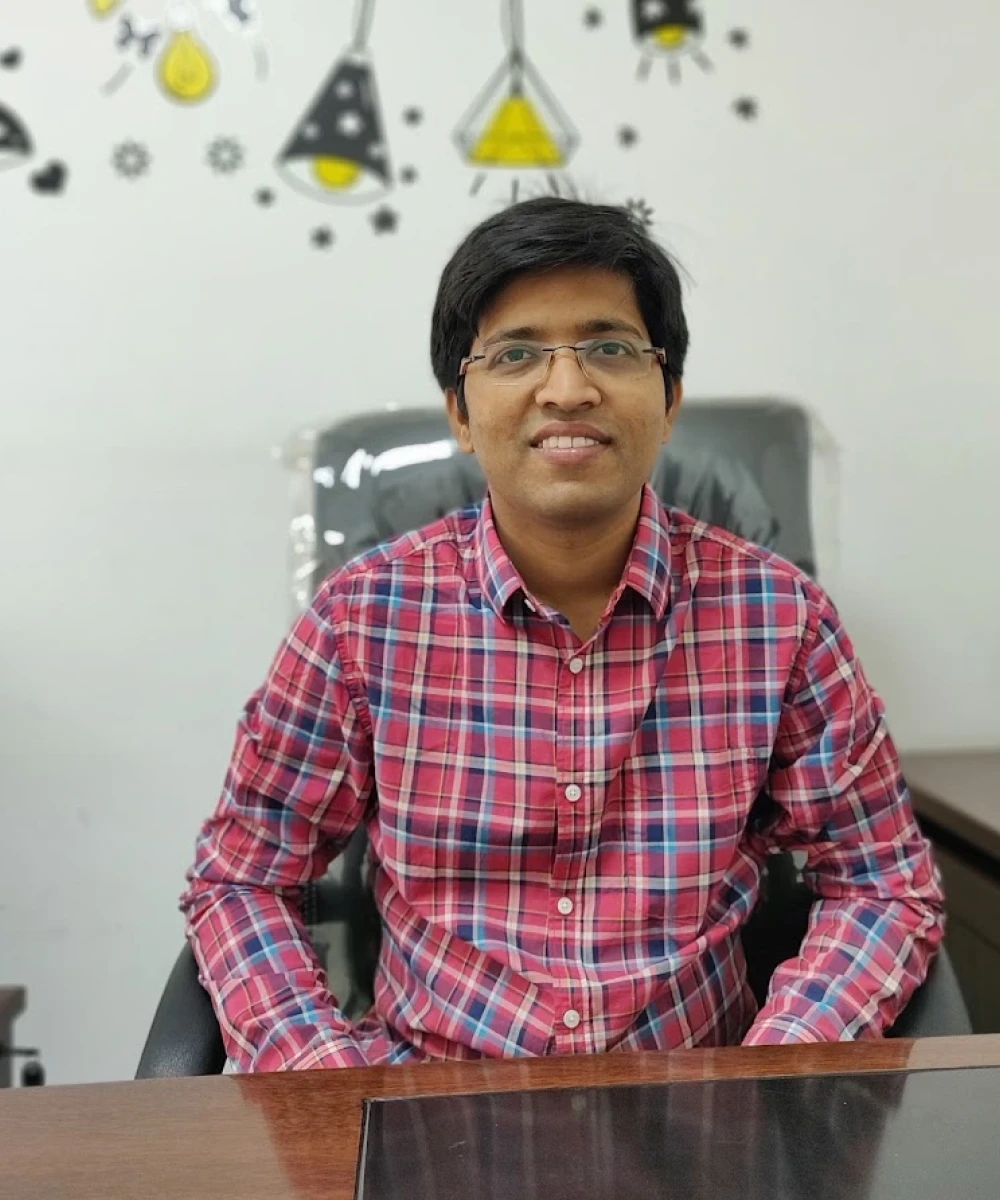
BDS, MDS · Orthodontist
Dr Shrikant completed BDS at Rural Dental College, Loni, and MDS in Orthodontics and Dentofacial Orthopaedics at M.G.V. Dental College, Nashik. He focuses on bite and alignment concerns.
His input is available when tooth position affects the plan.
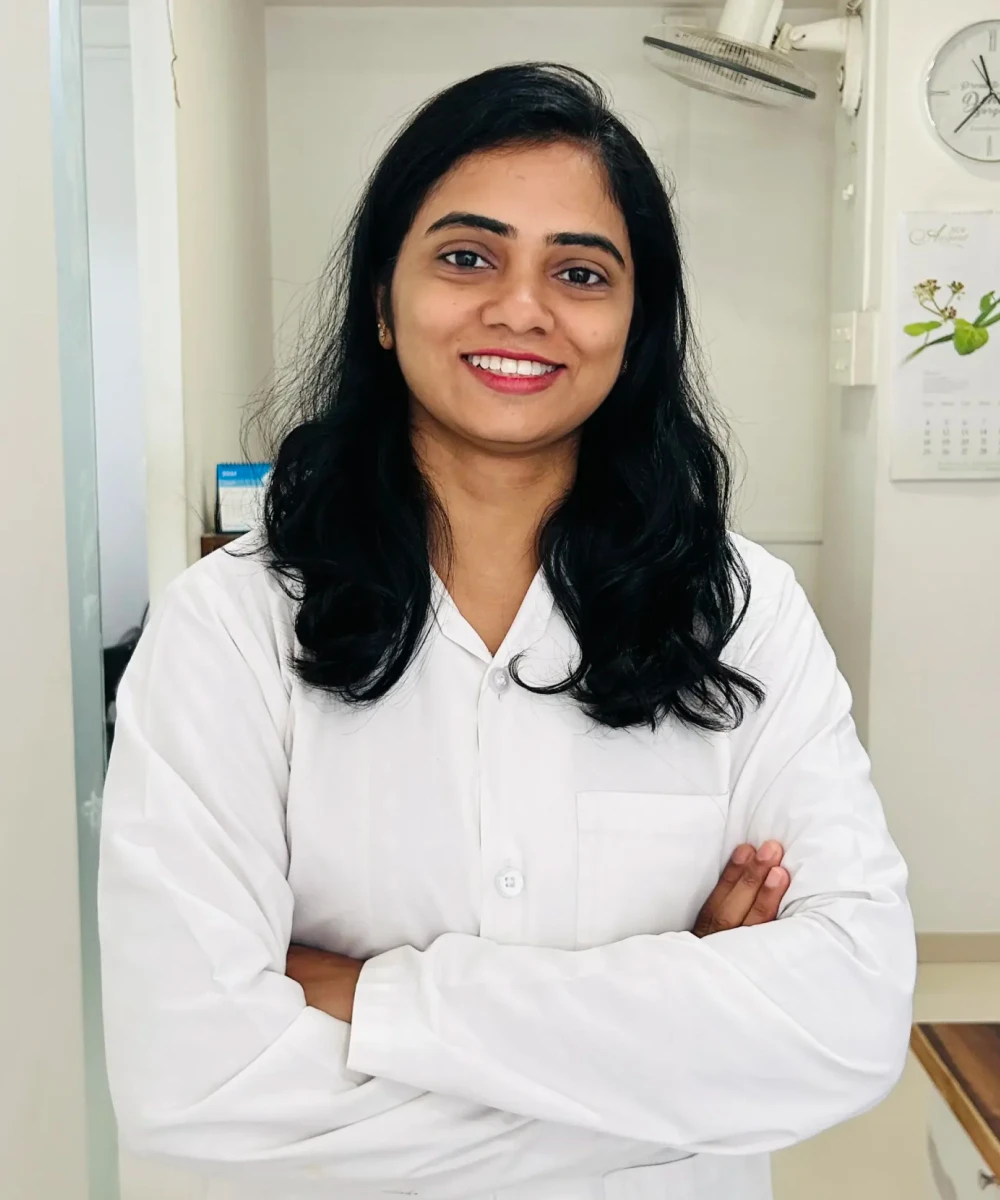
BDS, MDS · Endodontist
Dr Archana completed BDS at Rural Dental College, Loni, and MDS in Conservative Dentistry and Endodontics at SMBT Dental College, Sangamner. She received a Maharashtra University of Health Sciences gold medal and has taught as an assistant professor.
She assesses symptoms, tooth structure and restorative needs before recommending care.
The relevant dentist leads your plan, with coordinated support when needed.
“I have visited here for my teeth implants after being referred by a relative. I delayed it as I was very scared. But after meeting Dr Shrikant and the Implantologist I felt assured and went ahead with the treatment. It was a comfortable experience. Timely follow ups were made from the clinic about my recovery. Now I can eat everything without any trouble.”
“Outstanding experience getting my implant for front teeth done here. The caps looks completely natural and fit properly. I also got root canals for back teeth.Highly recommend Dr Archana and her skilled work!”
“I am visiting sai multispeciality dental clinic after searching so many clinic and finally I am very happy that I selected sai multispeciality dental clinicdentist in pune for my treatment.I am completely satisfied with my root canal treatment and dental crown . …”
“Excellent experience! I visited for a cracked molar, and Dr. Archana did an outstanding job over two appointments. Before beginning treatment, she clearly explained the process, why two visits were necessary, and the importance of allowing time to assess the results before my upcoming travel. …”
The rating below is the overall Google rating for the clinic, not a rating for Implant-Supported Dentures. These are 5-star Google reviews chosen for relevance to this page, shown as written. A longer review may be shortened at the end of a sentence, and the link opens the full review. Reviews describe individual experiences and do not predict the result of your treatment.
Find us in Alacrity Commercial Complex near Bitwise Terratower, Mohan Nagar, Baner.
Sai Multi Speciality Dental Clinic, Baner
Shop no 101, Alacrity Commercial Complex, near Bitwise Terratower, Mohan Nagar Co-Op Society, Baner, Pune, Maharashtra 411045, India
+91 70203 80193
WhatsApp +91 70203 80193
| Monday–Saturday | 10:00 am–1:00 pm 4:00 pm–9:00 pm |
|---|---|
| Sunday | Closed |
Please call before travelling on public holidays.
Call before travelling to confirm the schedule and any access requirements.
They are removable by the patient and are generally removed for cleaning and according to the wearing advice given for your tissues and design.
Sometimes, if its fit, bite, tooth position, material thickness and condition are suitable. A new denture may be needed when modification would weaken or compromise it.
Implants can improve retention, but movement and support depend on the design, tissue foundation, attachment wear and bite. Maintenance and adjustment remain necessary.
Yes. Inserts and other components can lose retention or wear and may need periodic replacement. The interval varies with design, use, cleaning and bite.
No. You remove an overdenture yourself for cleaning. A fixed full-arch bridge remains attached and is cleaned in the mouth.
The number depends on the jaw and the design. A lower denture is often held by two to four implants, while an upper denture usually needs more because the bone is softer. The dentist confirms the number after examination and imaging.
Yes. Most implant-supported dentures are removed daily so the denture, the attachments and the gum can be cleaned. The dentist shows you how to clean around each attachment and how often to return for review.
An examination remains necessary even when your concern sounds similar to a common dental problem.
Tell us what you have noticed and whether the concern is routine, uncomfortable or urgent.
If an overdenture has been proposed, bring the denture and imaging. We can review whether its current fit is correct, the planned implant and attachment positions, whether a new denture is required and what maintenance will involve.
We confirm appointment requests after checking availability.
Related care depends on the diagnosis, treatment sequence and long-term maintenance needs.
